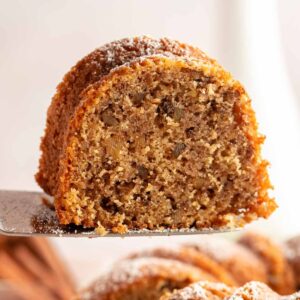
Easy Nut Cake
This nut cake is soft, dense, and full of cinnamon and crunchy walnuts. It’s dusted with powdered sugar and made easily in one bowl.
Ingredients
- ⅔ cup Butter softened, unsalted
- 1 cup Brown sugar light or dark brown sugar
- 1 cup Granulated sugar
- 2 teaspoon Vanilla extract
- ½ teaspoon Kosher salt
- 2 teaspoon Cinnamon
- ½ teaspoon Nutmeg
- 5 Eggs
- ⅓ cup Vegetable oil
- ½ cup Sour cream full fat
- 1 cup Buttermilk
- 3 cups Cake flour
- 3 teaspoon Baking powder
- 2 cups Walnuts
Instructions
- Preheat the oven to 180°C (350°F). Grease a bundt pan with softened butter and dust it with flour to prevent sticking.
- In a large mixing bowl, add the softened butter, brown sugar, granulated sugar, cinnamon, nutmeg, kosher salt, and vanilla extract. Beat with an electric hand mixer until the mixture is light, creamy, and well combined.
- Add the room-temperature eggs and the oil, and mix until fully incorporated. Add the sour cream and continue mixing until smooth.
- Add half of the flour, the baking powder, and half of the buttermilk. Mix until just combined.
- Add the remaining flour and buttermilk and mix again until almost combined. Fold in the chopped, toasted walnuts and mix only until the batter comes together and no dry flour remains—don’t overmix.
- Pour the batter into the prepared bundt pan and bake for 50–60 minutes, or until a toothpick inserted into the center comes out clean.
- Let the cake cool completely before inverting. Place a plate on top of the pan, flip it over, and gently tap to release the cake.
- Dust with powdered sugar or drizzle with caramel sauce. Slice, serve, and enjoy!
Notes
- Use room-temperature ingredients. Softened butter, room-temperature eggs, and warm sour cream mix more smoothly and create a finer crumb.
- Toast the walnuts. Lightly toasting the nuts before adding them brings out their flavor and adds a deeper, richer taste.
- Cream the butter well. Take your time creaming the butter and sugars until light and fluffy; this gives the cake lift and a soft texture.
- Measure the flour correctly. Spoon the flour into your measuring cup and level it off. Adding too much flour can make the cake dense.
- Don’t overmix the batter. Once the dry ingredients go in, mix only until the batter comes together. Overmixing will make the cake tough.
- Grease the bundt pan thoroughly. Use butter and flour to coat every corner and detail of the pan to ensure a clean release.
- Check for doneness early. Every oven is different, so start checking at the 50-minute mark. A toothpick should come out clean.
- Cool completely before flipping. Bundt cakes are delicate when warm. Cooling prevents cracking and ensures a clean release.
- Customize the flavor. Add raisins, pecans, almonds, or a touch of orange zest if you want to change up the flavor and texture.
Nutrition
Calories: 435kcalCarbohydrates: 47gProtein: 8gFat: 25gSaturated Fat: 8gPolyunsaturated Fat: 10gMonounsaturated Fat: 5gTrans Fat: 0.3gCholesterol: 77mgSodium: 255mgPotassium: 159mgFiber: 2gSugar: 27gVitamin A: 384IUVitamin C: 0.3mgCalcium: 111mgIron: 1mg
Tried this recipe?Let us know how it was!