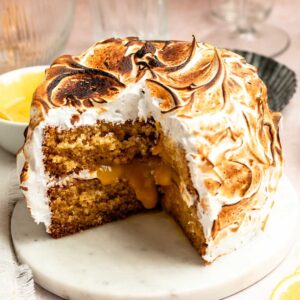
Lemon Meringue Cake
This lemon meringue cake is made with two layers of soft lemon cake filled with lemon curd and topped with toasted Swiss meringue.
Ingredients
For the lemon cake
- ⅔ cup Butter unsalted, room temperature
- ½ teaspoon Kosher salt
- 1 teaspoon Vanilla extract
- 1 ½ teaspoon Lemon zest
- 1 ¼ cups Granulated sugar
- 2 Eggs
- ½ cup Buttermilk
- ¼ cup Vegetable oil
- 1 ⅔ cups Flour
- 1 teaspoon Baking powder
- ½ teaspoon Baking soda
For the Swiss meringue
- 4 Egg whites
- ¾ cup Granulated sugar
- ½ teaspoon Kosher salt
- ½ teaspoon Cream of tartar
- ½ teaspoon Vanilla bean paste optional
Filling
- ⅓ cup Lemon curd Use my recipe for lemon curd from my lemon meringue cookies
Instructions
- Start by making the lemon curd from my lemon meringue cookies recipe. Let it cool completely in the fridge.
Make the lemon cake layers
- Preheat oven to 180c°C (350°F) and prepare 2 6-inch baking pans with parchment paper.
- In a large mixing bowl, add the softened butter, vanilla extract, granulated sugar, kosher salt, and lemon zest. Mix with an electric hand mixer until creamy and smooth for about 3 minutes.
- Add the eggs and mix until they are well incorporated.
- Gradually, while mixing, add the oil and pour it slowly until the mixture is homogenous, then add the buttermilk and mix until well combined.
- Add ½ of the flour, baking powder, and baking soda, and mix until almost combined.
- Then, add the other half of the flour and finish mixing with a rubber spatula until just combined and there are no lumps of flour visible.
- Divide the mixture into 2 6-inch baking pans. I suggest using cake strips for even baking. Bake in a 180°C (350°F) preheated oven for about 25-30 minutes or until a toothpick comes out clean with a few moist crumbs.
- Allow the cake layers to cool completely. Run a butter knife or a thin spatula around the edges of the cake to release it from the sides of the pan.
- Invert and Tap: Place a wire rack or plate over the pan, hold them firmly, and flip to invert the pan. Lift Gently: Carefully lift one side of the pan, then remove it completely to slide your cake onto the surface.
Make the Swiss meringue
- Start by combining egg whites, salt, and sugar in a heatproof bowl. Place the bowl over a pot of simmering water, creating a double boiler.
- Whisk the mixture constantly while heating until it reaches 160°F (71°C) or feels smooth and not grainy when rubbed between your fingers.
- Once the desired temperature is reached, remove the bowl from heat and transfer the mixture to a stand mixer fitted with a whisk attachment.
- Add the cream of tartar, vanilla bean extract, and beat on high speed for about 5-7 minutes, or until stiff, glossy peaks form and the meringue has cooled to room temperature.
Assembly
- Pipe a small dollop of the frosting on the surface that you will frost. Lay the first cake layer over the frosting dot.
- Pipe a circle around the edges of the cake using the meringue. Then fill the circle with 3-4 tablespoons of the lemon curd and smooth it out.
- Top with the second cake layer and frost the cake with the meringue. Make a wave pattern using an offset spatula.
- Carefully toast the meringue with a kitchen torch. I recommend doing this just before serving this cake. Serve and enjoy!
Notes
- Use room temperature ingredients. It is important that you use room-temperature ingredients like eggs and butter. This step ensures that your mixture mixes into a homogenous mixture and bakes perfectly.
- Don’t overfill with curd. Add a thin, even layer of lemon curd between the cakes to avoid it spilling out the sides.
- Zest your lemons carefully. When zesting the lemons, avoid the bitter white pith beneath the skin. Use a microplane or fine grater to get the most aromatic zest possible.
- Constantly whisk while making the curd! It is really important if you want to get a smooth and silky curd.
- For the Swiss meringue, make sure your bowl is grease-free. Even a little fat can stop meringue from whipping. Avoid egg yolks in the whites, and for extra insurance, wipe your bowl with a bit of lemon juice before whipping.
- Don't let the lemon curd come to a boil! This will cook the eggs and leave you with scrambled eggs. Make sure that the lemon curd mixture cooks over medium-low heat.
- Measure your flour correctly! When measuring your flour, avoid scooping it with a measuring cup. Instead, stir the flour with a spoon to create as many air pockets as possible, and spoon it into your measuring cup. Finally, level it with a back of a knife.
- Don’t overmix the cake batter, you don’t want to develop the gluten in the flour. This step ensures you have a moist cake and not a dense and dry cake.
- Line your baking pan with parchment paper! This step helps the cake to bake evenly, and it makes sure that your loaf cake will release easily from the pan.
- Test for doneness carefully. Insert a toothpick into the center, it should come out clean or with just a few crumbs attached when done.
- Cool cake layers completely. Warm cake will melt the curd and meringue, so let the layers cool fully before filling.
Nutrition
Calories: 441kcalCarbohydrates: 61gProtein: 5gFat: 20gSaturated Fat: 10gPolyunsaturated Fat: 4gMonounsaturated Fat: 5gTrans Fat: 1gCholesterol: 67mgSodium: 496mgPotassium: 101mgFiber: 1gSugar: 45gVitamin A: 446IUVitamin C: 0.4mgCalcium: 51mgIron: 1mg
Tried this recipe?Let us know how it was!