
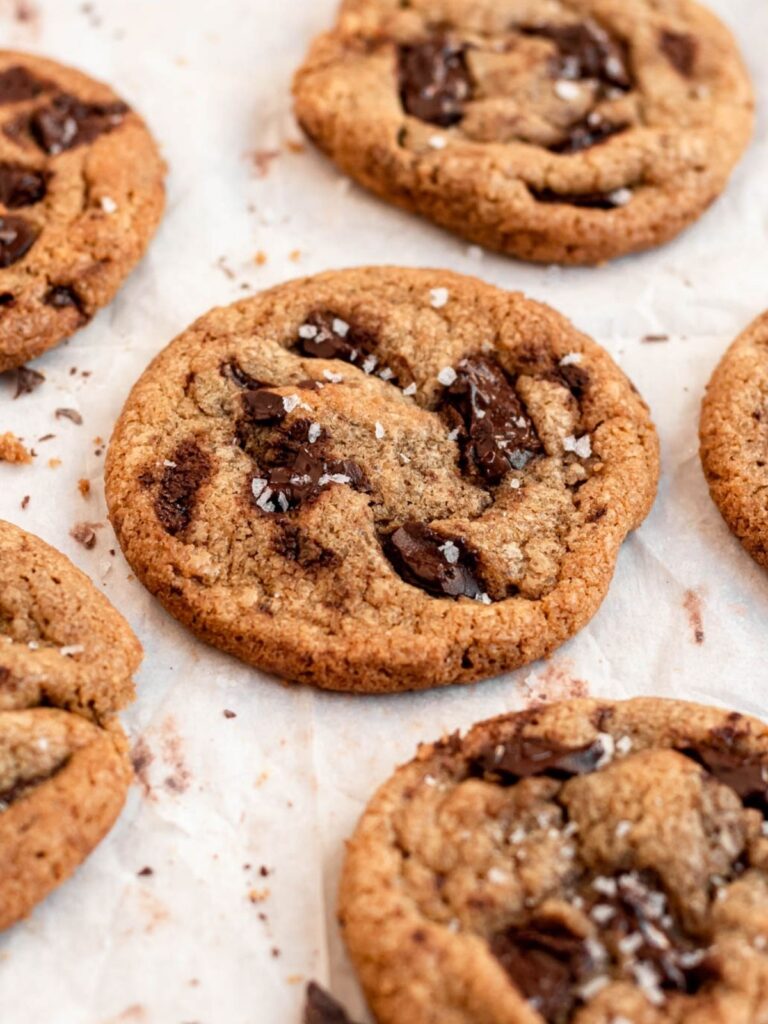
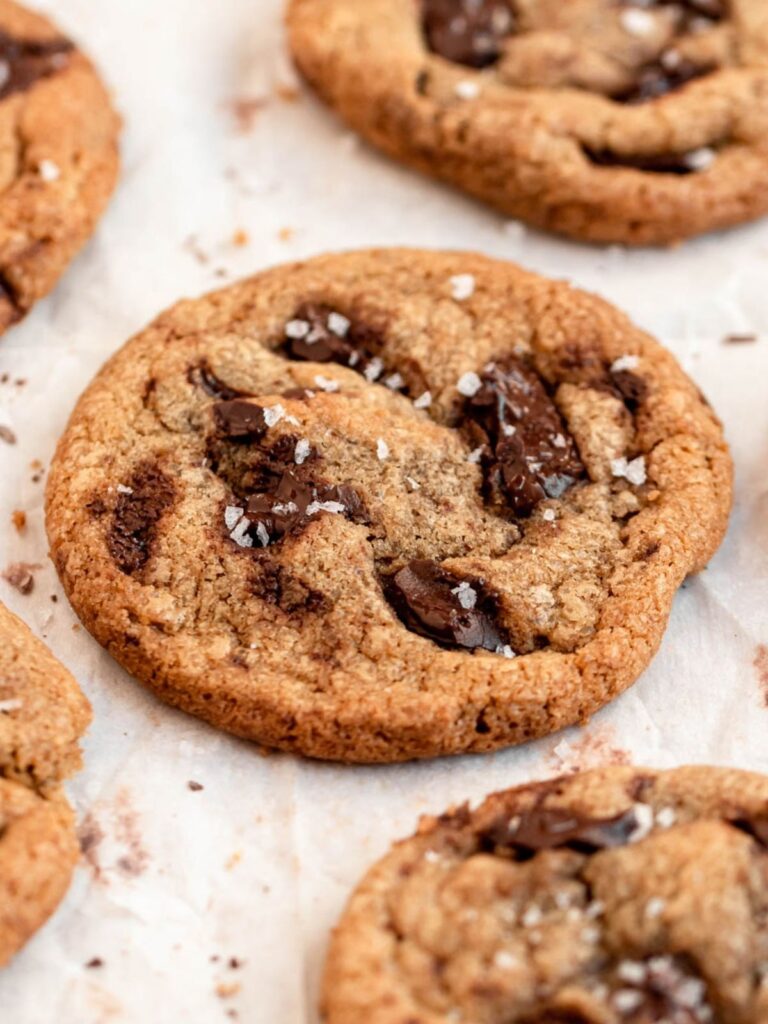
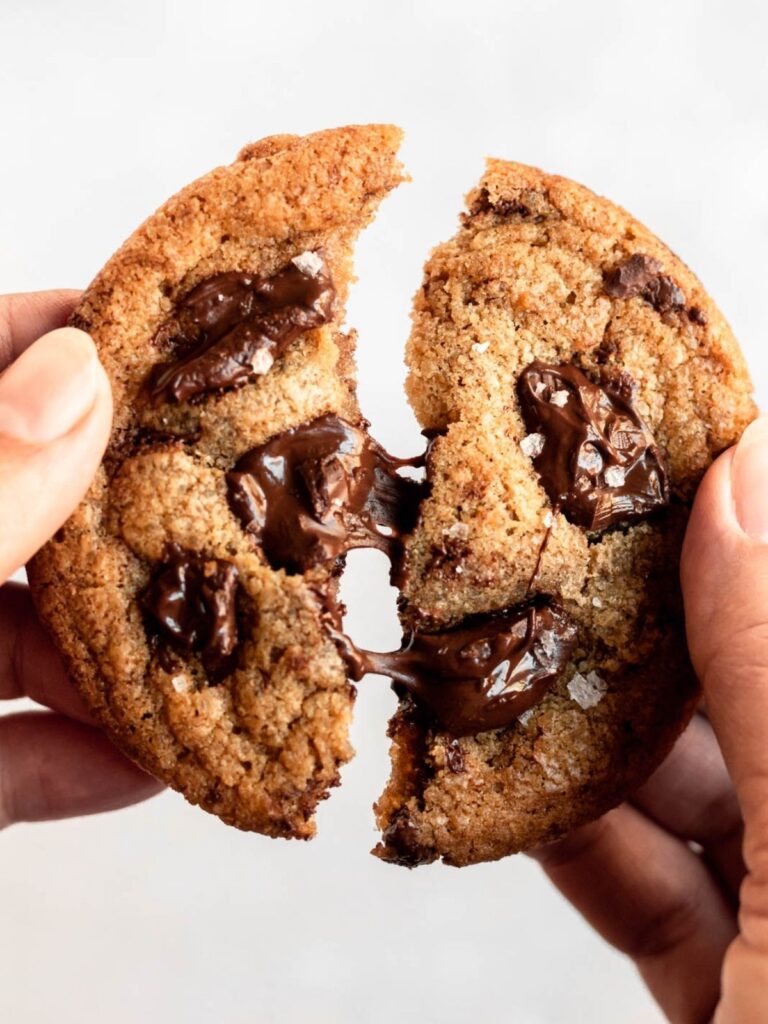
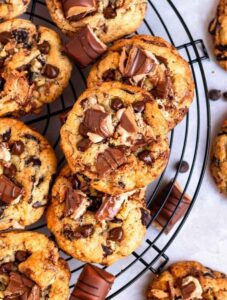
These bakery-style brown butter chocolate chip cookies have crisp, caramelized edges, dense and chewy centers, and puddles of melted dark chocolate.
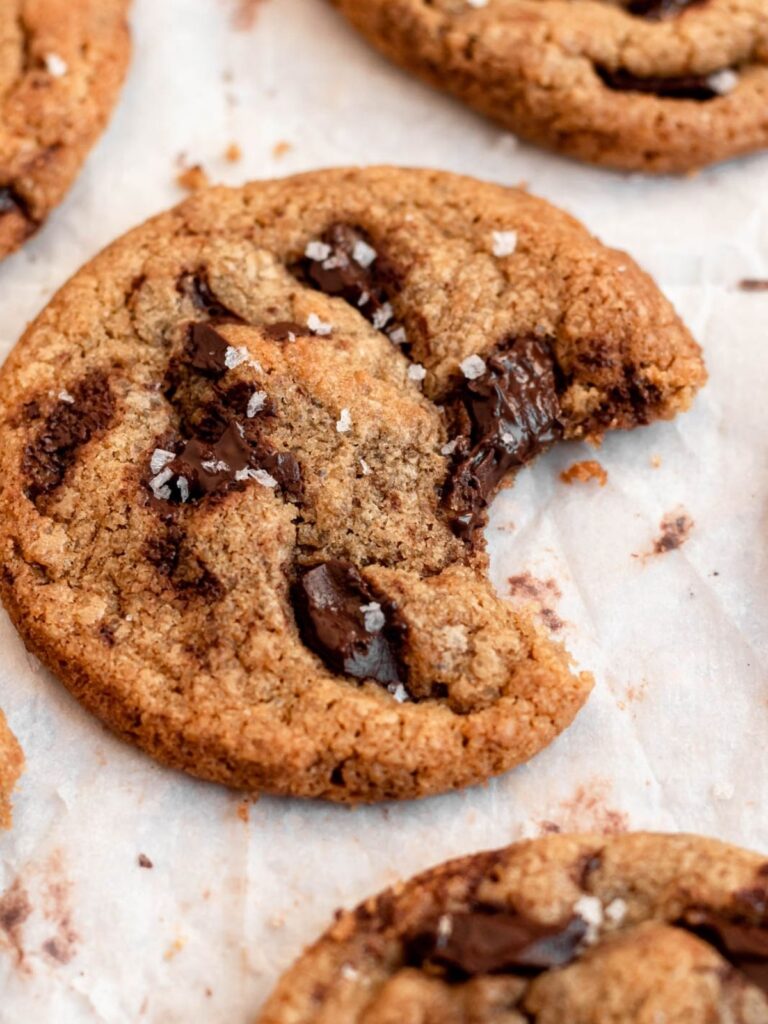
Browning the butter evaporates its natural water content and toasts the milk solids, creating a deep, nutty caramel flavor base.
Portioning the dough with a 1 ½-tablespoon scoop and chilling for at least 1 hour ensures these cookies stay thick and fudgy rather than turning flat or greasy.
For more cookie recipes, check out my chewy peanut butter cookies, cookies and cream cookies, and turtle cookies.
Jump to:
Why this recipe works
- Rich Egg Yolk Base: Adding an extra egg yolk provides natural emulsifiers and fat to restore chewiness without diluting the dough.
- Complex Caramel Notes: Browning the butter toasts the milk solids to create a rich, nutty caramel flavor profile without needing added spices.
- Melted Chocolate Puddles: Using chopped dark chocolate bars instead of standard chips creates smooth, luxurious pools of chocolate throughout every bite.
- Bakery-Perfect Shape: Swirling a cookie cutter around the hot cookies immediately after baking creates clean, perfectly round edges with thick centers.
The Science: Fudginess Without Extra Liquid
Heating butter over medium heat boils off its natural water content and triggers the Maillard reaction, turning the milk solids golden brown.
Because browned butter contains zero water, standard cookie doughs can easily bake up greasy or dry. Instead of adding liquid back in, this recipe balances the missing moisture through structural fat and sugar chemistry:
| Ingredient | Scientific Role | Impact on Cookie Texture |
| Extra Egg Yolk | Delivers lecithin (an emulsifier) and fat without adding excess liquid whey. | Prevents the brown butter fat from separating, ensuring a fudgy, dense center. |
| Dark Brown Sugar | Contains natural molasses, which is hygroscopic (absorbs and holds moisture). | Retains internal moisture during baking for long-lasting chewiness. |
| Chilled Dough | Allows the flour to hydrate fully in the butter fat before baking. | Prevents rapid spreading in the oven, keeping the cookies thick. |
Baking Soda vs. Baking Powder for Chewy Cookies
| Leavening Agent | Structural Impact | Texture & Appearance | Why We Use It |
| Baking Soda (Pure Sodium Bicarbonate) | Reacts with acidic brown sugar, encourages Maillard browning. | Yields a denser, chewy center, crinkly surface, and crisp, caramelized edges. | Selected: Maximizes chewiness and deep browning. |
| Baking Powder (Soda + Powdered Acids) | Creates double-acting gas release during mixing and heating. | Yields a cakey, puffed rise with smooth tops and a lighter, crumbly crumb. | Avoided (produces a cake-like cookie). |
Ingredients
For the most accurate baking results, weigh your ingredients in grams using a digital kitchen scale. Exact measurements are on the recipe card at the bottom of this post.
For the Dough
Unsalted Butter: Browned on the stovetop to build the rich, nutty flavor base.
Dark Brown Sugar: Adds moisture, chewiness, and a deep molasses flavor note.
Granulated Sugar: Promotes crisp, caramelized edges and aids proper spreading.
Large Egg + Egg Yolk: Room temperature. One whole egg provides structure; the extra yolk adds fat for a fudgy center.
Pure Vanilla Extract: Complements the caramel notes of the brown butter.
All-Purpose Flour: Provides the structural framework for a thick, soft cookie.
Baking Soda: Reacts with the brown sugar to create chewiness and encourage deep browning.
Kosher Salt: Enhances the sweet caramel and dark chocolate flavors.
For the Mix-ins & Topping
Dark Chocolate Bar (56%–70% Cocoa): High-quality semisweet or bittersweet dark chocolate (such as Lindt, Ghirardelli, or Guittard), chopped into chunks, creates rich, melted chocolate pools.
Flaky Sea Salt: Sprinkled on top immediately after baking for a sweet-and-salty finish.
Instructions
Brown the Butter & Cool
Add the butter to a light-colored saucepan over medium heat. Light-colored pans allow you to monitor the color change accurately. Swirl the pan constantly as the butter melts, boils, and foams.
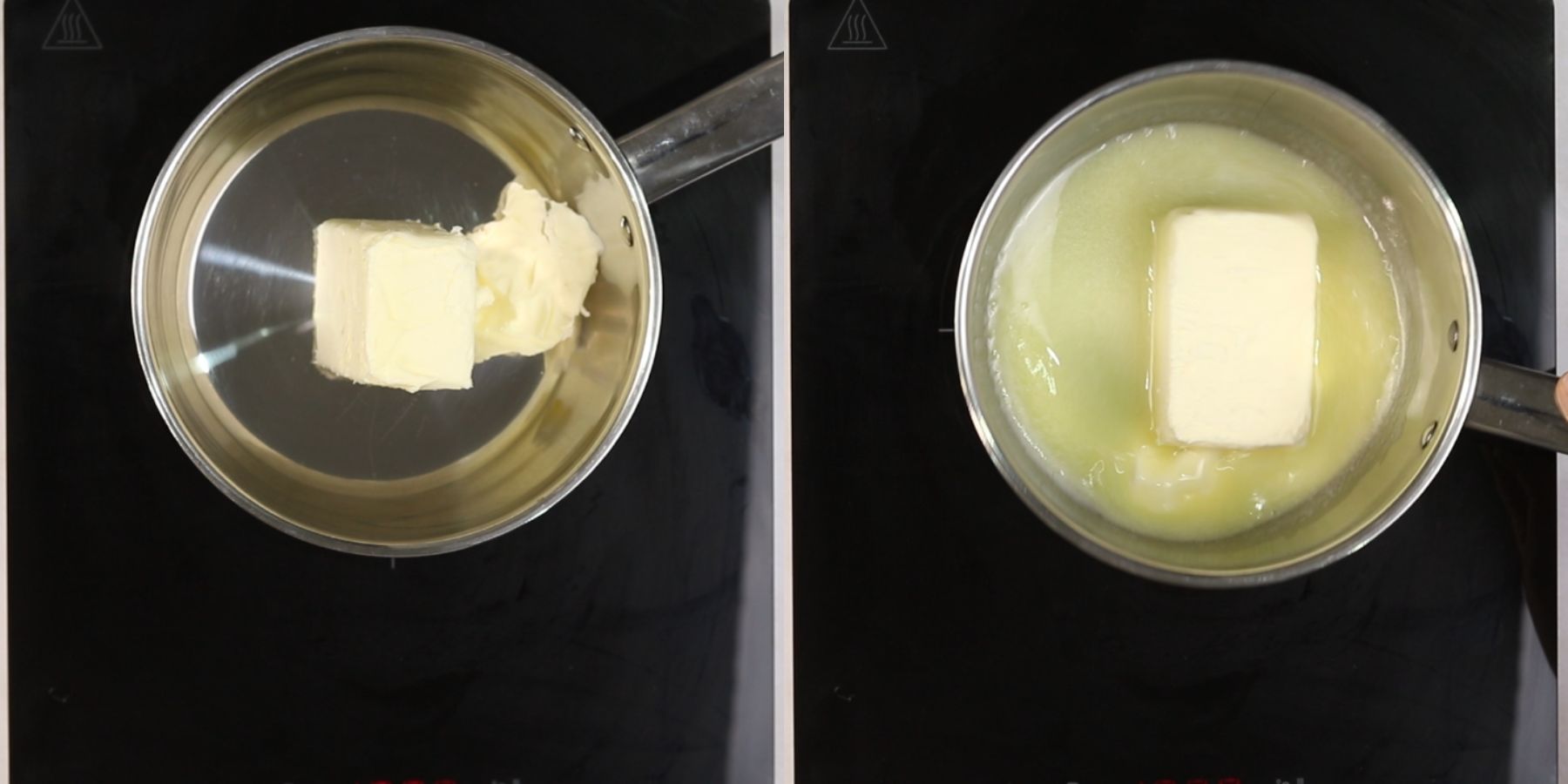
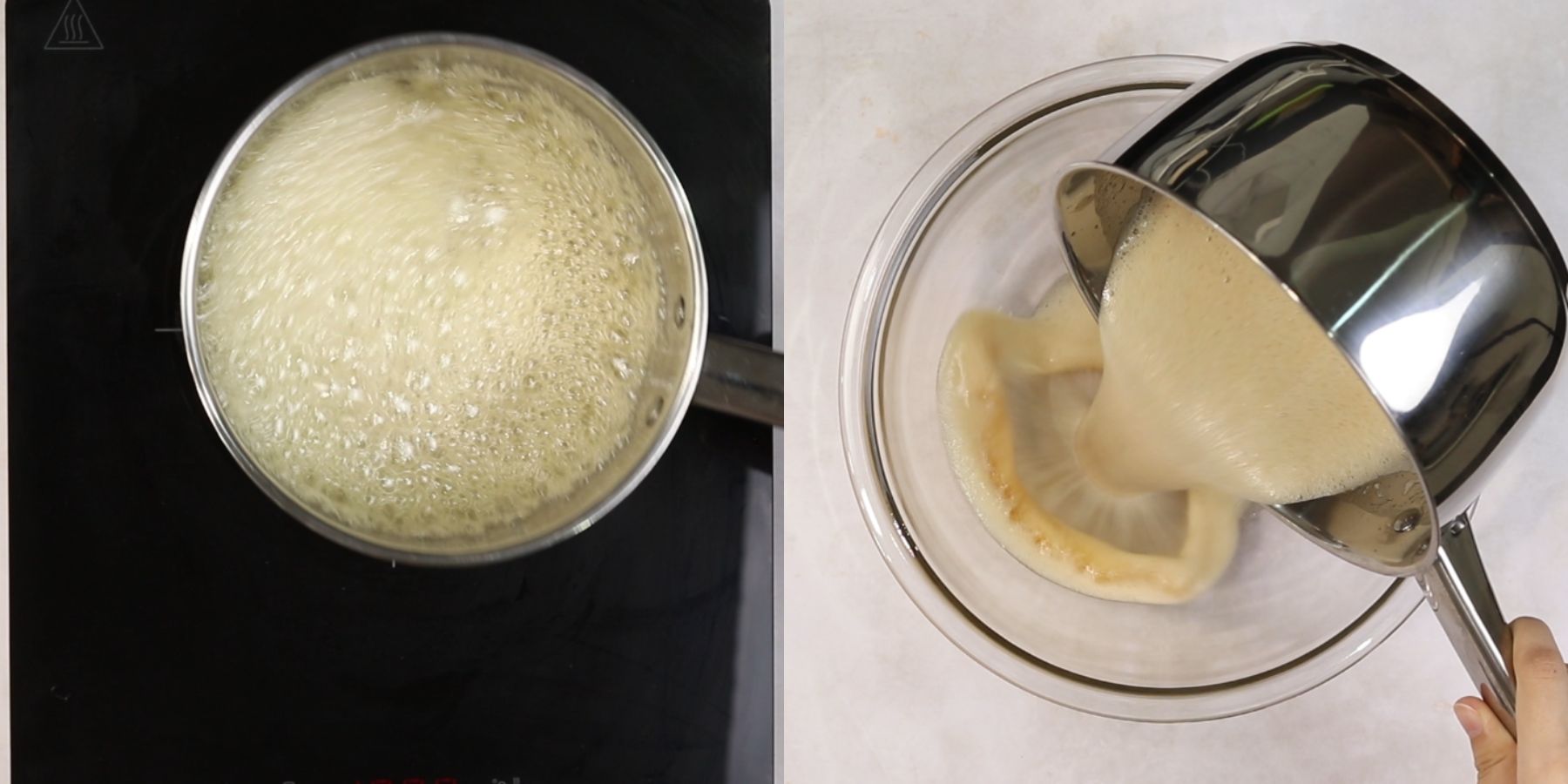
Watch for the crackling sound to stop and for small golden-brown specks to form at the bottom of the pan. The butter will smell distinctly nutty.
Immediately pour the brown butter (and all brown specks) into a heat-safe mixing bowl to stop the cooking process. Allow the brown butter to cool until it is lukewarm to the touch (around 15 to 20 minutes).
Add the brown sugar, granulated sugar, kosher salt, and vanilla extract to the cooled brown butter. Whisk vigorously until smooth and combined.

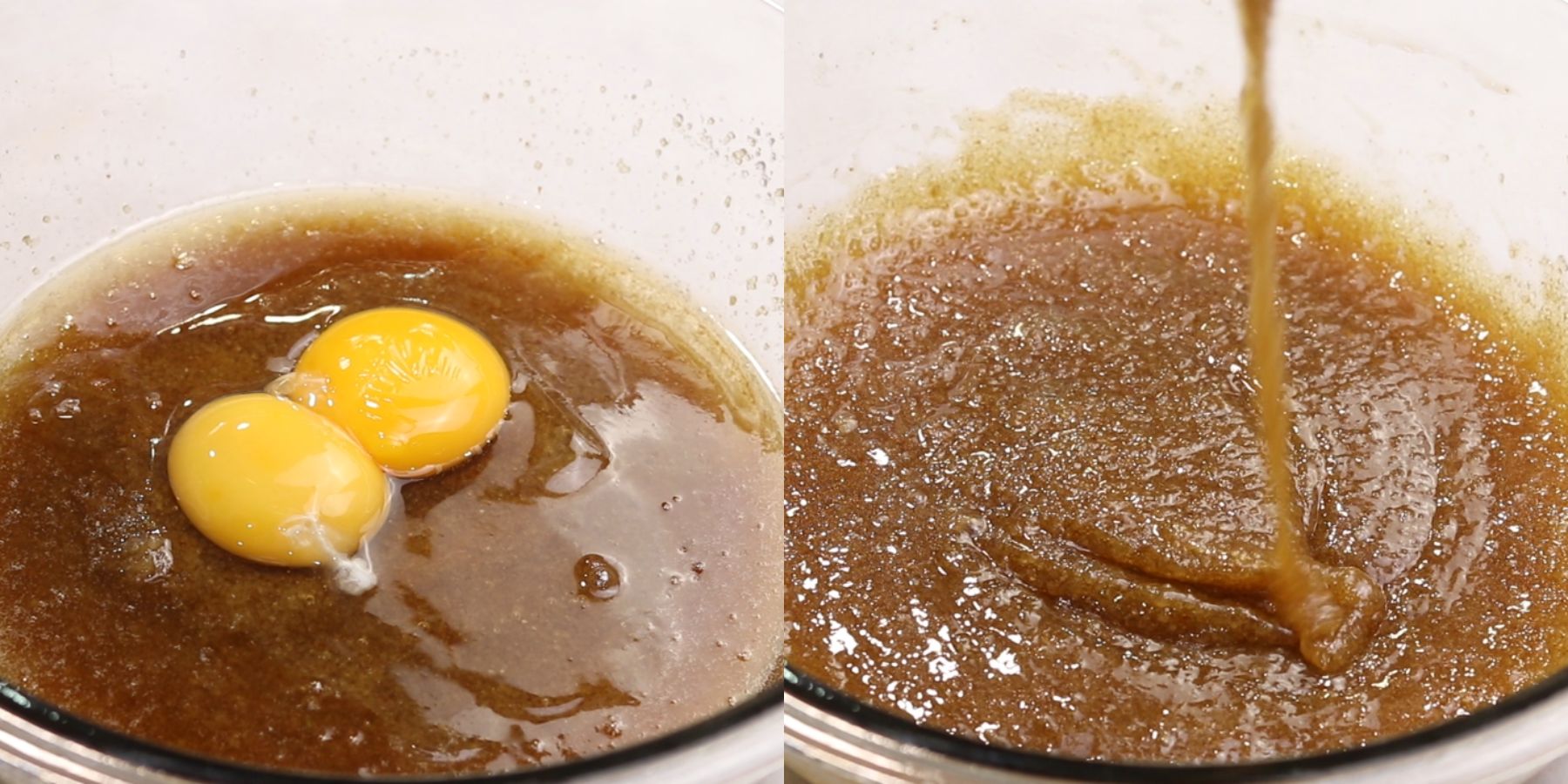
Add the room-temperature egg and egg yolk. Whisk until the mixture becomes slightly paler, smooth, and glossy.
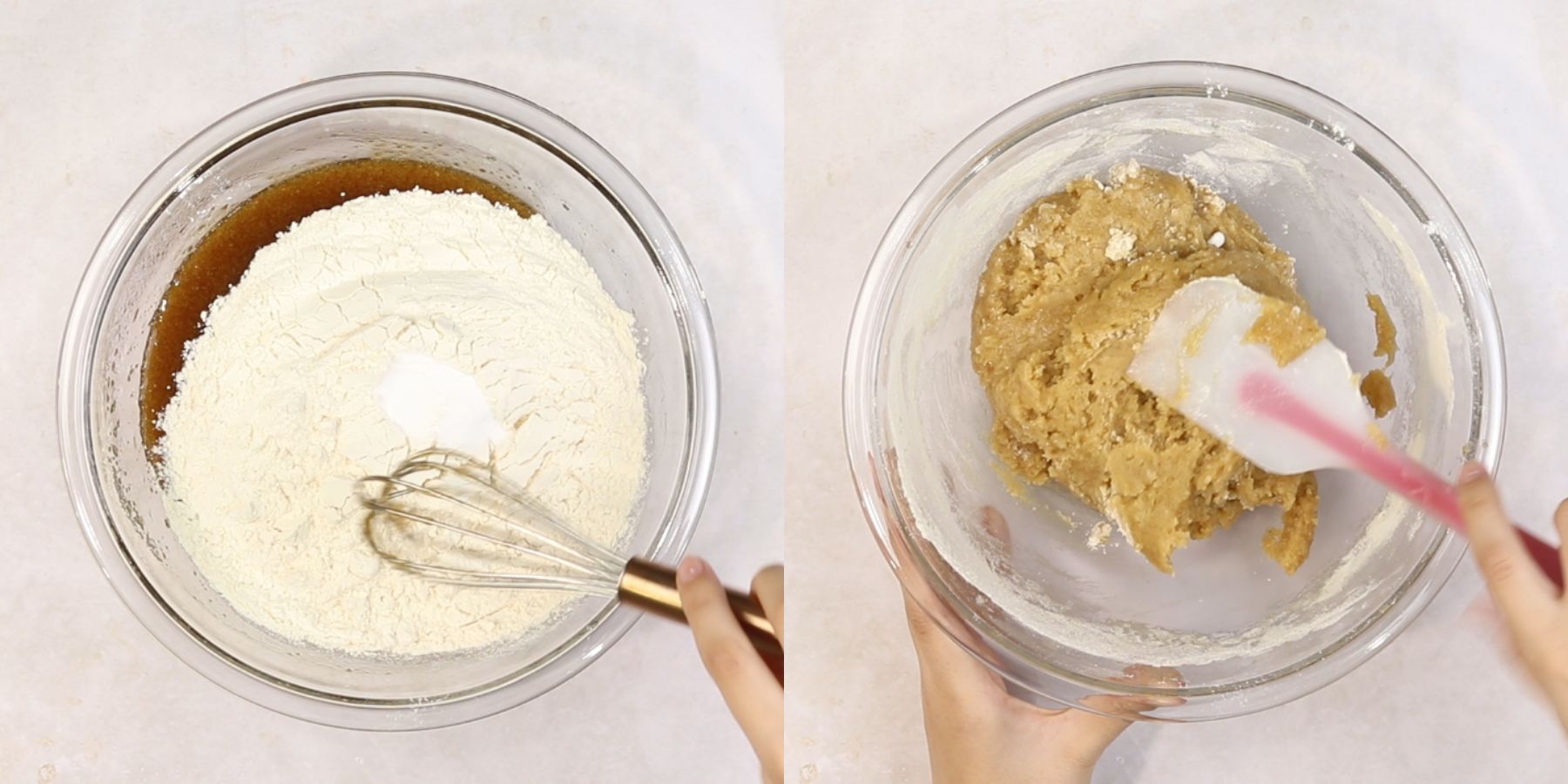
Sift the all-purpose flour and baking soda into the bowl. Fold gently with a rubber spatula until a few dry flour streaks remain.
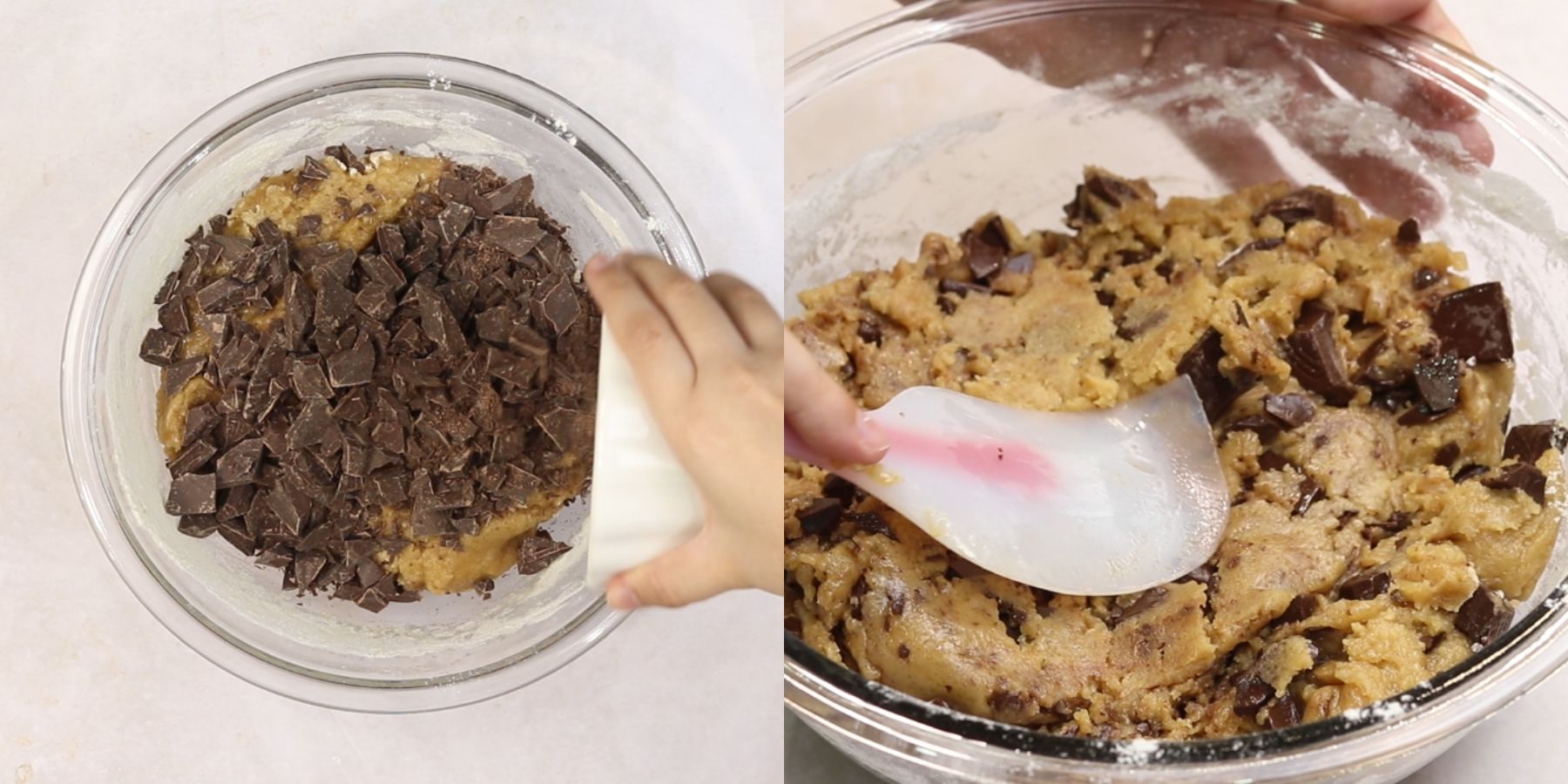
Add the chopped dark chocolate chunks. Fold just until no dry flour remains. Do not overmix.
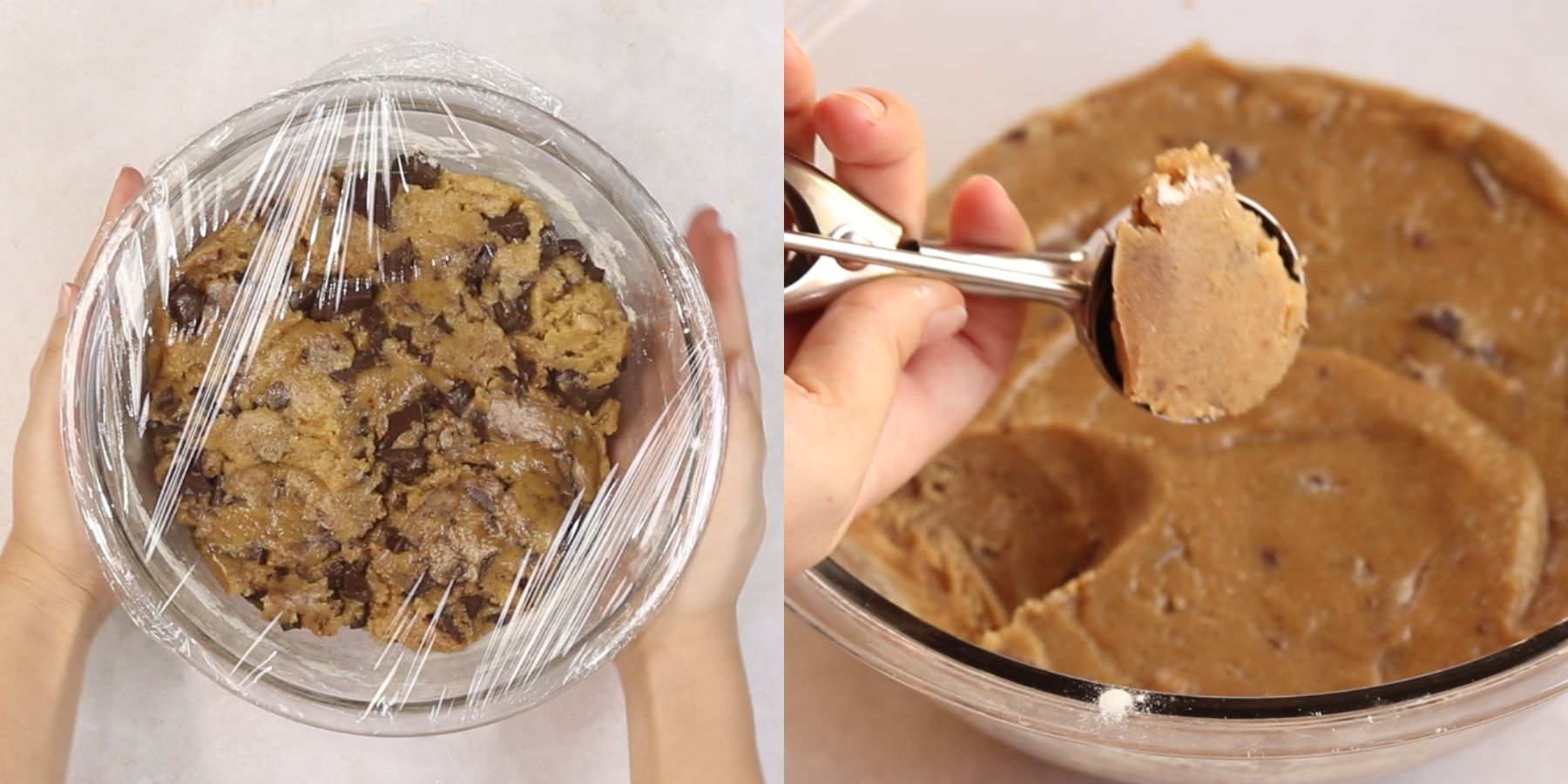
Chill: Cover the bowl tightly with plastic wrap. Refrigerate the dough for at least 1 to 2 hours (overnight yields the best flavor development). Chilling hydrates the flour and firms up the butter fat to prevent excess spreading.
Preheat your oven to 180°C (350°F) and line a large baking sheet with parchment paper.
Use a 1 ½-tablespoon cookie scoop to portion dough into balls onto the prepared sheets, leaving 2 inches between each cookie. Press a few reserved chocolate chunks into the top of each ball.
Bake for 11 to 12 minutes, until the edges are golden brown and set, but the centers still look soft and slightly underbaked.
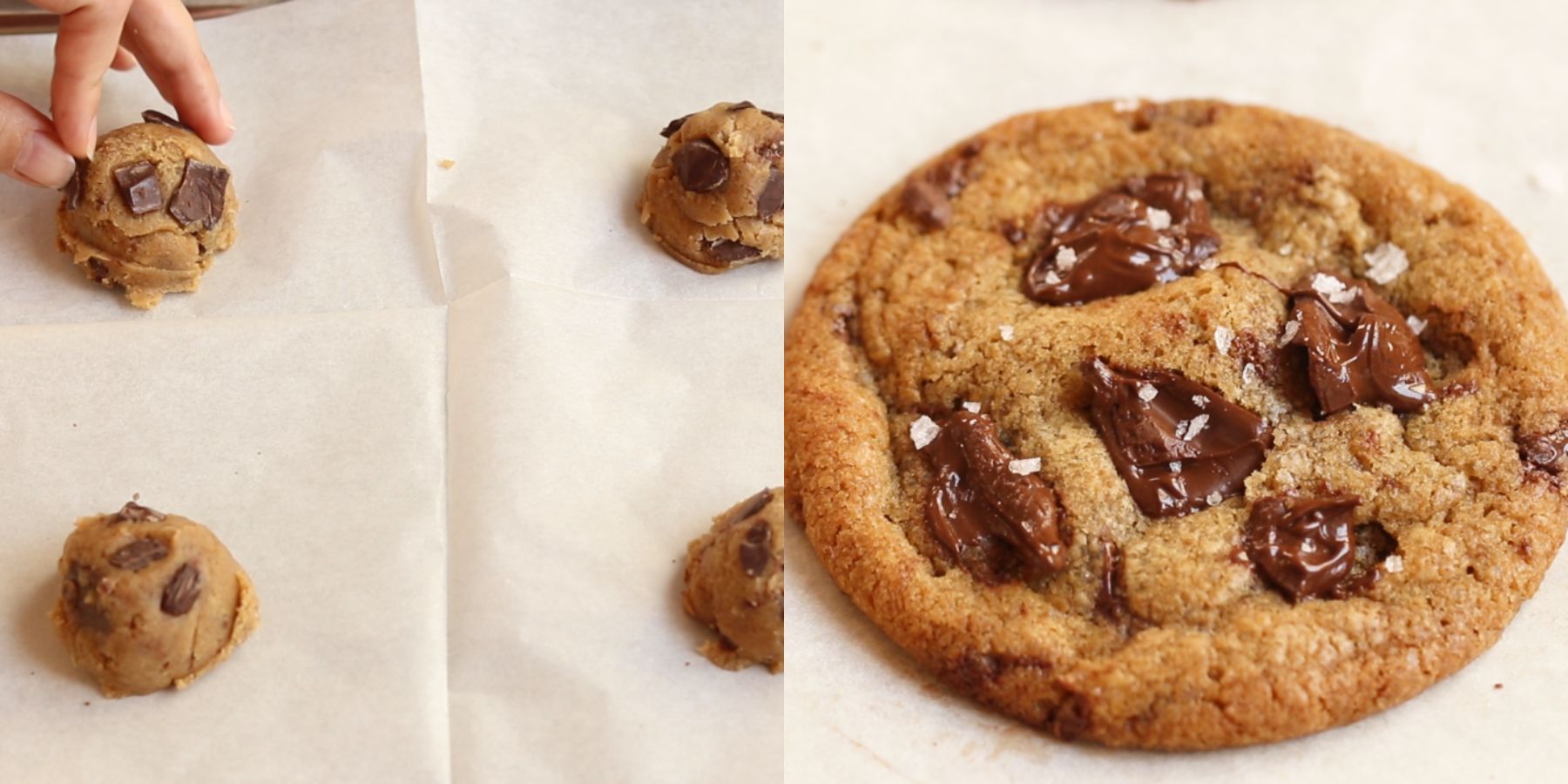
The Cookie Scoot: Immediately upon pulling the tray from the oven, place a large round cookie cutter over a hot cookie and gently swirl it in a circular motion against the baking sheet for 3–5 seconds. This pulls in stray edges and creates a perfectly round, thick cookie.
Sprinkle with flaky sea salt. Allow the cookies to cool on the baking sheet for 5 minutes before transferring them to a wire rack to set completely.
Expert Tips
- Use Chopped Bar Chocolate: Chocolate bars contain more cocoa butter than commercial chocolate chips, allowing them to melt smoothly into puddles and pools.
- Cool the Butter Properly: Never mix hot brown butter with eggs or sugar. Hot butter will cook the eggs and dissolve the sugar prematurely, resulting in greasy, flat cookies.
- Weigh Your Flour in Grams: Measuring flour by volume with measuring cups often packs in extra flour, causing dry, cakey cookies.
- Do Not Overbake: Remove the cookies at the 11–12 minute mark while the centers are still soft. They continue to set on the warm baking pan during the 5-minute post-bake rest.
Troubleshooting
Why did the cookies bake flat or greasy?
The butter was likely added while still hot, melting the sugars prematurely, or the dough skipped the 1-hour chill step.
Why are the cookies cakey instead of chewy?
Overmeasuring flour by volume adds excess dry mass. Weighing ingredients in grams prevents heavy, bread-like textures.
Frequently Asked Questions
You can, but chocolate chips contain stabilizers that prevent them from melting smoothly. Chopped chocolate bars yield signature melted pools and ribbons throughout the cookie.
Pulling the cookies when the centers look soft is key to achieving a fudgy texture. Residual heat from the baking sheet continues cooking the interior during the 5-minute pan rest.
No. This recipe uses an extra egg yolk and dark brown sugar to provide necessary fats, emulsifiers, and moisture retention naturally without diluting the brown butter flavor.
Storing
Store fully cooled cookies in an airtight container for up to 5 days. Keep a slice of white bread in the container to retain softness.
Freezing
Freezing Dough (Up to 3 Months): Flash-freeze 1 ½ tablespoon dough balls on a tray for 1 hour, then transfer to a freezer bag. Bake straight from frozen at 180°C (350°F) for 12–13 minutes.
Freezing Baked Cookies (Up to 2 Months): Freeze cooled cookies in an airtight container layered with parchment paper. Thaw at room temperature or microwave for 10 seconds to re-melt the chocolate.
Substitutions
Flour: Swap all-purpose flour 1:1 with a high-quality measure-for-measure gluten-free baking flour containing xanthan gum.
Butter: If using salted butter, omit the added kosher salt in the dough.
Brown Sugar: Light brown sugar works in place of dark brown sugar, yielding a slightly milder caramel flavor.
Chocolate: Semisweet or milk chocolate bars can replace dark chocolate depending on your sweetness preference.
Variations
Espresso Chocolate Chunk: Whisk ½ teaspoon of instant espresso powder into the warm brown butter to deepen and intensify the dark chocolate flavor.
Brown Butter Nutty Crunch: Fold in ½ cup of toasted, chopped pecans, walnuts, or hazelnuts alongside the dark chocolate chunks.
Toffee Chunk: Mix ⅓ cup of crushed English toffee bits into the dough for extra crunch and buttery caramel flavor.
Triple Chocolate: Use an equal mix of dark, milk, and white chocolate chunks for multi-toned chocolate pools.
Equipment
- Digital kitchen scale
- Light-colored saucepan
- Mixing bowl & whisk
- 1 ½ tablespoon cookie scoop
- Baking sheet & parchment paper
- Round cookie cutter (for reshaping)
- Wire cooling rack
More cookie recipes
Chewy chocolate chip cookies- Classic, soft-baked cookies loaded with rich chocolate chunks.
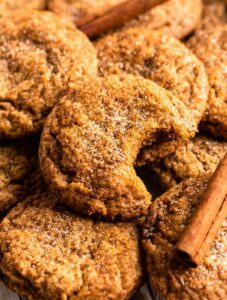
Coffee Cake Cookies- These coffee cake cookies have a soft cinnamon cookie base topped with a buttery brown sugar crumble and a sweet cream cheese glaze.
Connect With Us
Review: Leave a rating and comment below if you enjoyed this recipe. Socials: Follow on Facebook, Instagram, and Pinterest. Save: Pin this recipe to Pinterest for later.
📖 Recipe
Brown Butter Chocolate Chip Cookies
Ingredients
- 2 cups Flour AP, plain flour
- 1 teaspoon Baking soda
- 1 cup Butter unsalted
- ⅓ cup Granulated sugar
- 1 ¼ cups Brown sugar
- 1 Egg
- 1 Egg yolk
- 1 teaspoon Vanilla extract
- ½ teaspoon Salt
- 1 ½ cups Chocolate chunks
Instructions
- Brown the Butter & Cool: Add the butter to a light-colored saucepan over medium heat. Light-colored pans allow you to monitor the color change accurately. Swirl the pan constantly as the butter melts, boils, and foams.
- Watch for the crackling sound to stop and for small golden-brown specks to form at the bottom of the pan. The butter will smell distinctly nutty.
- Immediately pour the brown butter (and all brown specks) into a heat-safe mixing bowl to stop the cooking process. Allow the brown butter to cool until it is lukewarm to the touch (around 15 to 20 minutes).
- Add the brown sugar, granulated sugar, kosher salt, and vanilla extract to the cooled brown butter. Whisk vigorously until smooth and combined.
- Add the room-temperature egg and egg yolk. Whisk until the mixture becomes slightly paler, smooth, and glossy.
- Sift the all-purpose flour and baking soda into the bowl. Fold gently with a rubber spatula until a few dry flour streaks remain.
- Add the chopped dark chocolate chunks. Fold just until no dry flour remains. Do not overmix.
- Chill: Cover the bowl tightly with plastic wrap. Refrigerate the dough for at least 1 to 2 hours (overnight yields the best flavor development). Chilling hydrates the flour and firms up the butter fat to prevent excess spreading.
- Preheat your oven to 180°C (350°F) and line a large baking sheet with parchment paper.
- Use a 1 ½-tablespoon cookie scoop to portion dough into balls onto the prepared sheets, leaving 2 inches between each cookie. Press a few reserved chocolate chunks into the top of each ball.
- Bake for 11 to 12 minutes, until the edges are golden brown and set, but the centers still look soft and slightly underbaked.
- The Cookie Scoot: Immediately upon pulling the tray from the oven, place a large round cookie cutter over a hot cookie and gently swirl it in a circular motion against the baking sheet for 3–5 seconds. This pulls in stray edges and creates a perfectly round, thick cookie.
- Sprinkle with flaky sea salt. Allow the cookies to cool on the baking sheet for 5 minutes before transferring them to a wire rack to set completely.
Notes
- Weigh Your Ingredients: For consistent bakery-quality results, weigh dry ingredients (especially flour) in grams using a digital kitchen scale. Measuring by volume often packs in excess flour, creating dry, cakey cookies.
- Cool the Brown Butter: Let the browned butter cool for 15–20 minutes until lukewarm before whisking with sugars and eggs. Hot butter will scramble the eggs and melt the sugars prematurely, leading to greasy, flat cookies. Be sure to scrape all golden-brown specks into the mixing bowl.
- Use Bar Chocolate: Use high-quality 56%–70% cocoa dark chocolate bars (such as Lindt, Ghirardelli, or Guittard) chopped by hand. Standard chocolate chips contain stabilizers that hold their shape and prevent them from forming signature melted chocolate pools.
- Don't Skip Chilling: Chill dough for at least 1 to 2 hours (or overnight for maximum flavor). Chilling fully hydrates the flour and solidifies the butterfat, preventing the cookies from spreading too thin.
- Bake Time & Pan Rest: Pull cookies at the 11 to 12-minute mark when edges are golden and set, even if centers look soft and slightly underbaked. Let them rest on the hot baking sheet for 5 minutes post-bake so residual heat sets the fudgy interior.
- The Cookie Scoot: Immediately after removing the pan from the oven, swirl a round cookie cutter around each hot cookie for 3–5 seconds to push in stray edges and create perfectly uniform, thick centers.
- Freezing & Baking from Frozen: Portion dough into 1 ½-tablespoon balls, flash-freeze on a tray for 1 hour, and store in a freezer bag for up to 3 months. Bake straight from frozen at 180°C (350°F) for 12 to 13 minutes without thawing.
Comments
No Comments